The ecological restoration is of utmost importance to generate refuge for the wild animal species of the community of Aranjez

The howlwer monkey in Costa Rica
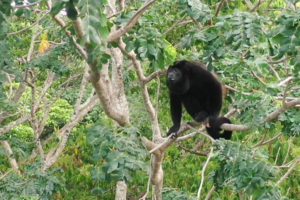
The howler monkey in Costa Rica: a howl for help at NATUWA Howler monkeys in Costa Rica and NATUWA’s workThe howler monkey in Costa Rica is known for a voice that carries far through the forest. At NATUWA in Aranjuez de Puntarenas, these calls are part of daily life. They also remind us of the wildlife that needs space to live and move. Our work combines emergency care, rehabilitation and habitat restoration. We receive howler monkeys injured by power lines, road traffic and dogs. At the same time, we restore forest cover and care for connections that wild animals use. This article brings together NATUWA’s experience with rescued animals and observations of a troop living freely in the sanctuary’s restored forest.The mantled howler monkey: Alouatta palliataThe mantled howler monkey, Alouatta palliata, is known in Costa Rica as the mono congo. Howler monkeys are a familiar part of the country’s wildlife. Their calls are often heard around dawn or dusk by people living near forest habitat. Howler monkeys occur in the forests of Central and South America. They live in socially organized groups and spend much of their time among the treetops. For example, they feed mainly on leaves, fruit and flowers. In this way, through their feeding and movement, they also contribute to the life of the forest, including seed dispersal. Therefore, learning about their behavior helps us understand why protecting forest habitat matters, both for individual monkeys and for the groups to which they belong. Infant howler monkey cared for at NATUWA · Archive 2017.Howler monkey sounds and habitat in Costa RicaHowler monkey sounds carry over long distances. Calls help members of a group communicate and can signal the presence of another group. A loud, prolonged call may have a different role from a shorter, softer sound. However, a howl alone does not tell us that an animal is injured or needs to be rescued. For example, at NATUWA, we have heard especially lively calling during rain, thunder and lightning, sometimes in the early morning. These are observations from life at the sanctuary. Listening encourages us to pay attention to what is happening around the troop without assuming that every call has the same meaning. In addition, we have observed high-pitched female calls during the dry-season months of January, February and March, alongside males shaking branches. The original account suggested a possible connection with reproductive behavior. These observations should be read as NATUWA’s interpretation, rather than a confirmed explanation of each call. Howler monkey habitat includes forests and wooded areas near human settlements. However, when tree cover becomes fragmented, moving between feeding and resting places can bring monkeys close to roads, power lines and dogs.A free-living troop at NATUWAThe troop described here lives freely in and around NATUWA. It is not a captive howler monkey attraction. These wild residents move through the trees and follow their own feeding, resting and social routines.For context, in the original 2024 account, NATUWA described a troop of about 30 individuals, with other troops…

Continue ReadingThe howlwer monkey in Costa Rica

Celebrating International Tapir Day: Education and Conservation in Natuwa

Celebrando el Día Internacional del Tapir: Educación y Conservación en Natuwa El Día Internacional del Tapir (Tapirus bairdii)  es una fecha emblemática para nosotros en Natuwa, no solo porque representa la oportunidad de celebrar a uno de los animales más fascinantes de nuestra flora, el tapir centroamericano, sino también porque nos permite reforzar nuestro compromiso con la educación ambiental y la conservación de la biodiversidad. Este año, tuvimos el privilegio de compartir esta celebración con un grupo entusiasta de estudiantes de la Escuela de Aranjuez, quienes, junto a sus madres, se sumergieron en el maravilloso mundo de estos mamíferos, conocidos cariñosamente como la jardinera del bosque o el arquitecto del bosque debido a su crucial papel en la dispersión de semillas y la modificación de su entorno natural. El Tapir Centroamericano o Danta El tapir centroamericano (Tapirus bairdii) es el mamífero terrestre más grande de América Central y es fundamental para la salud de nuestros ecosistemas tropicales. A pesar de su tamaño y su importancia ecológica, enfrenta múltiples amenazas, principalmente la pérdida de hábitat y la caza ilegal, lo que lo ha llevado a estar catalogado como en peligro de extinción. Es por esto que en Natuwa nos esforzamos no solo en protegerlos, sino también en educar a las nuevas generaciones sobre la importancia de su conservación. Da inicio la actividad: Charlas y talleres La jornada comenzó con una charla introductoria a cargo de nuestro director, Rodolfo Orozco, quien personalmente recibió a los niños y a sus madres, presentando al personal de Natuwa y explicando el propósito y la importancia de nuestro trabajo. La emoción de los pequeños era palpable, una mezcla de curiosidad y asombro que solo aumentó con cada actividad programada. Después de la introducción, un biólogo experto ofreció una charla detallada sobre el tapir centroamericano, concentrándose en Mandy, una de nuestras queridas hembras tapir. Los niños aprendieron sobre su dieta, comportamiento y el papel ecológico que desempeñan estos seres como jardineros del bosque. Luego, el grupo se trasladó al recinto de Oreja Partida, uno de nuestros tapires machos, donde un veterinario discutió aspectos importantes de la salud y el manejo veterinario de los tapires en cautiverio. Estas charlas no solo fueron informativas sino también una oportunidad para que los niños hicieran preguntas y interactuaran directamente con expertos en conservación. El Día Internacional del Tapir es una fecha emblemática para nosotros en Natuwa, no solo porque representa la oportunidad de celebrar a uno de los animales más fascinantes de nuestra flora, el tapir centroamericano, sino también porque nos permite reforzar nuestro compromiso con la educación ambiental y la conservación de la biodiversidad. Este año, tuvimos el privilegio de compartir esta celebración con un grupo entusiasta de estudiantes de la Escuela de Aranjuez, quienes, junto a sus madres, se sumergieron en el maravilloso mundo de estos mamíferos, conocidos cariñosamente como la jardinera del bosque o el arquitecto del bosque debido a su crucial papel en la dispersión de semillas y la modificación de su entorno natural. Tamales para dantas:…

Continue ReadingCelebrating International Tapir Day: Education and Conservation in Natuwa

World turtle day

World turtle day World turtle day celebrates one of the oldest organisms on the planet, which can be found on land and in water. Among them, as the turtle drinks from the cover of this article, it is a land turtle that we can find in the Central Pacific of Costa Rica, in addition to other localities throughout the country. These animals and due to the ecological restoration carried out by the Sanctuary enjoy an ideal environment for turtles, with vegetation, bodies of water, and the necessary food. These beautiful turtles live wild, while we also provide shelter for exotic turtles. How many years can a turtle live? Who worries about turtles? Where are the most turtles in the world? Why these topics? Why are turtles in danger of extinction? This last week has been celebrated the World Turtle Day On May 23, the International Turtle Day was celebrated. This day was chosen to increase respect and provide more knowledge to humanity about the oldest creatures in the world, present on land and at sea. After staying on the planet for millions of years, they are disappearing too easily due to numerous reasons.  

Continue ReadingWorld turtle day

Corporate Volunteering with wild animals

Read more about the article Corporate Volunteering with wild animals
Many companies involved in the restoration of nature come to NATUWA to plant trees and work with animals.

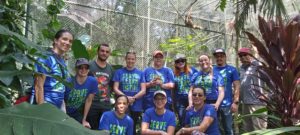
Corporate volunteering with wildlife occurs in the companies most committed to the environment and the restoration of nature. Costa Rica preserves a great diversity in both plants and animals. Natural resources are constantly threatened by urban planning, hunting, agriculture, and many more human-related factors (anthropogenic factors). For this reason, many companies are committed to the care of the environment by carrying out ecological practices within their facilities. In order to preserve the Natural Capital of Costa Rica, many companies carry out activities that foster a green culture among their employees. In addition, recycling, proper management of wastewater, use of biodegradable products, among others are environmentally friendly initiatives that they carry out. Also, through corporate volunteering with wild animals. Opportunities for business volunteers NATUWA Wildlife Sanctuary is a leading voice for wildlife and nature. This is how, for more than 24 years, we have worked to protect, preserve and restore some of Costa Rica's most emblematic habitats and species. With the desire to preserve the Natural Capital for future Costa Rican generations. The actions of corporate volunteering with wild animals play an important role in our ecological restoration work. Every year, dozens of volunteers from companies around the country help wildlife and ecological restoration. They carry out activities in NATUWA by planting trees, rescuing, rehabilitating, and releasing those animals that have the possibility of returning to their natural environments. And to those who do not, providing all the necessary attention so that they live with dignity in the sanctuary. In addition, these companies committed to nature and their teams of Corporate Volunteers will partner with our staff and International Volunteers to carry out environmental enrichment activities with jaguars, tapirs, sloths, macaws, monkeys, and other animals species. Corporate Volunteering with wildlife Enriching human perception about nature by reconnecting today's people outdoors, on the paths of the Sanctuary is where educators and students learn how to support local wildlife. The NATUWA trails are true wildlife habitats turned into outdoor classrooms where volunteers learn about species and ecosystems of Costa Rica, improve their academic skills, and nurture their innate curiosity and creativity. For more information about our Volunteer Program please follow this link (here!)

Continue ReadingCorporate Volunteering with wild animals

Celebrating Arbor Day in NATUWA Costa Rica

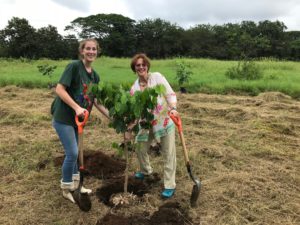
Happy Tree Day!! At NATUWA, with the help of the volunteer program, we have created a forest of native Costa Rican trees, such as cocobolo, jenízaro, guayacán, sota caballo, cristobal, rom rom, ceibos, guayabón and others. The NATUWA Sanctuary has participated in reforestation activities since 2000, and there are still three more hectares to reforest. Shelter and protection for wild animals and also for humans Trees are vital for human beings; they provide the enjoyment of a healthy life, along with a lush landscape. Besides, many animal species benefit from the shelter trees produce, protecting them from the climate elements, and providing food. The beautiful green giants produce oxygen, purify the water, stop soil erosion, beautify the landscape, and prevent drought. At NATUWA, we love trees, and today is a special day to plant them ...

Continue ReadingCelebrating Arbor Day in NATUWA Costa Rica

Orphaned mantled howler monkey (Alouatta palliata)

Read more about the article Orphaned mantled howler monkey (<i>Alouatta palliata</i>)
Mantled howler monkey

Officials from MINAE brought in a baby mantled howler monkey (Alouatta palliata). Local residents found her after learning that her mother had been killed by hunters and going to rescue her. Mantled howler monkeys feed on leaves and fruit, so they help disperse seeds in forests. However, they are hunted and sometimes kept as pets. Some people even hunt them for fun. The Sanctuary will provide her with appropriate care and management with a view to releasing her into the wild in the future. ———————————————————————————————— Calderón Soto Luis Mario. Natural Resource Management UNED, Costa Rica

Continue ReadingOrphaned mantled howler monkey (Alouatta palliata)

Cotorra (Amazona albifrons)

A juvenile of Cotorra (Amazona albifrons) entered the sanctuary of NATUWA parrots. This one was found by a person in the Center of Puntarenas and taken to the Coast Guard, the same one transferred it to the Sanctuary where it will receive the attention necessary to be released. It has the feathers of the wings cut, presents a very wild behavior, is not domesticated, which increases the possibilities of being able to integrate back to its natural environment, from which it never had to be extracted.

Continue ReadingCotorra (Amazona albifrons)

Racoon ( Procyon Procyon )

A Raccoon was brought to the Macaw Sanctuary NATUWA by the Puntarenas security forces. The animal was tied with a leash around its neck. Its captors did not perceive that the leash was causing harm, when in fact it produced very deep wounds. The raccoon will be released as soon as its wounds heal. A raccoon can present very aggressive behavior toward humans, for obvious reasons.

Continue ReadingRacoon ( Procyon Procyon )

Coyote pups ( Canis latrans )

Coyote pups ( Canis latrans) Two coyote cubs were orphaned after a farmer killed their mother because it hunted their pets - chickens, goats and sheep. With just a few days old, their eyes were closed. These two female and male puppies entered the Macaw Sanctuary NATUWA by SINAC workers. Their future is uncertain. It is unlikely there will be the possibility that they can be released, since they will be raised in captivity and with a loss of fear of humans.

Continue ReadingCoyote pups ( Canis latrans )