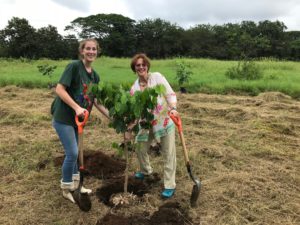
Volunteers play a very important role in the management of wild animals and the development of the Sanctuary. Volunteers provide support in the care and management of wild animals, such as sloths, jaguars, monkeys and other animals of Costa Rica.

The howlwer monkey in Costa Rica
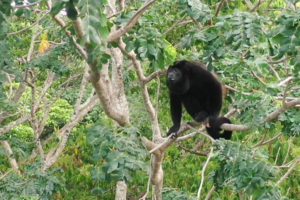
The howler monkey in Costa Rica: a howl for help at NATUWA Howler monkeys in Costa Rica and NATUWA’s workThe howler monkey in Costa Rica is known for a voice that carries far through the forest. At NATUWA in Aranjuez de Puntarenas, these calls are part of daily life. They also remind us of the wildlife that needs space to live and move. Our work combines emergency care, rehabilitation and habitat restoration. We receive howler monkeys injured by power lines, road traffic and dogs. At the same time, we restore forest cover and care for connections that wild animals use. This article brings together NATUWA’s experience with rescued animals and observations of a troop living freely in the sanctuary’s restored forest.The mantled howler monkey: Alouatta palliataThe mantled howler monkey, Alouatta palliata, is known in Costa Rica as the mono congo. Howler monkeys are a familiar part of the country’s wildlife. Their calls are often heard around dawn or dusk by people living near forest habitat. Howler monkeys occur in the forests of Central and South America. They live in socially organized groups and spend much of their time among the treetops. For example, they feed mainly on leaves, fruit and flowers. In this way, through their feeding and movement, they also contribute to the life of the forest, including seed dispersal. Therefore, learning about their behavior helps us understand why protecting forest habitat matters, both for individual monkeys and for the groups to which they belong. Infant howler monkey cared for at NATUWA · Archive 2017.Howler monkey sounds and habitat in Costa RicaHowler monkey sounds carry over long distances. Calls help members of a group communicate and can signal the presence of another group. A loud, prolonged call may have a different role from a shorter, softer sound. However, a howl alone does not tell us that an animal is injured or needs to be rescued. For example, at NATUWA, we have heard especially lively calling during rain, thunder and lightning, sometimes in the early morning. These are observations from life at the sanctuary. Listening encourages us to pay attention to what is happening around the troop without assuming that every call has the same meaning. In addition, we have observed high-pitched female calls during the dry-season months of January, February and March, alongside males shaking branches. The original account suggested a possible connection with reproductive behavior. These observations should be read as NATUWA’s interpretation, rather than a confirmed explanation of each call. Howler monkey habitat includes forests and wooded areas near human settlements. However, when tree cover becomes fragmented, moving between feeding and resting places can bring monkeys close to roads, power lines and dogs.A free-living troop at NATUWAThe troop described here lives freely in and around NATUWA. It is not a captive howler monkey attraction. These wild residents move through the trees and follow their own feeding, resting and social routines.For context, in the original 2024 account, NATUWA described a troop of about 30 individuals, with other troops…
Continue ReadingThe howlwer monkey in Costa Rica

Corporate Volunteering at Natuwa: Yamaha, An Example of Conservation and Solidarity

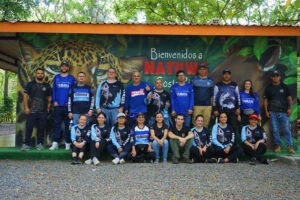
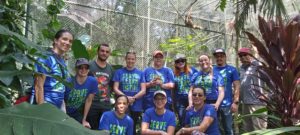
Corporate Volunteering at Natuwa: Yamaha as an Example of Conservation and Solidarity In the heart of Aranjuez, Puntarenas, lies a wildlife sanctuary that resonates with a deep commitment to nature conservation and the care of endangered species. Natuwa, our sanctuary, has become a haven for animals in need and a center of learning and collaboration for those who seek to make a difference. Yamaha joins NatuwaToday, we received an exceptional visit, a clear example of how corporate volunteering can make a significant difference: Yamaha joined us for a day full of enthusiasm, learning, and direct action for nature. Welcoming BreakfastThe day began with the warmth and hospitality that characterizes our community; a delicious breakfast prepared by the dedicated ladies of Aranjuez welcomed the Yamaha team. This first encounter, full of pleasant conversations and a spirit of camaraderie, served as the perfect prelude to a day full of meaningful contributions.Environmental Enrichment ProjectWith the sun rising and nature as a witness, the Yamaha team ventured into the heart of Natuwa to participate in an environmental enrichment project. Tapirs and red and green macaws were the fortunate beneficiaries of this initiative. Through these actions, Yamaha demonstrated its commitment to biodiversity conservation and became an active part of our effort to provide a better home for the species we shelter.Safety and SupervisionIt is crucial to highlight that all these activities were carried out under the strict supervision of our professional wildlife management leaders. Safety is an absolute priority at Natuwa, and as such, all necessary protocols were rigorously followed to ensure the well-being of the animals and the Yamaha team. The Yamaha groups never entered the animal enclosures; instead, they participated outside or in areas like the kitchen, where they could contribute safely and effectively. Only experts and trained professionals had direct access to the enclosures, ensuring that the interactions complied with our high safety and animal care standards.Lunch and Daily TasksAfter enjoying a lunch that re-energized everyone, the team joined our daily tasks, feeding some of Natuwa's most emblematic residents, such as jaguars, monkeys, and, of course, our tapirs and macaws. It was a moving and fun sight: people, regardless of their experience in the kitchen, came together for a common cause, learning to prepare the special diets our animals require. Beyond its nutritional value, this act of care represents a bridge of empathy and connection with the natural world. Teamwork and CommitmentThe Yamaha volunteer crew stood out not only for the joy and discipline they brought with them but also for the remarkable teamwork they demonstrated. They understood the importance of carefully preparing the diets, ensuring that each animal receives the necessary nutrients in a balanced manner. Their success in this task not only benefited our animals but also positively impacted our workers and the families that take care of them, strengthening the support network that sustains Natuwa.Inspiration for ConservationThis corporate volunteering day becomes a powerful narrative of how solidarity and collective action can significantly contribute to nature conservation. Through its participation and…

Continue ReadingCorporate Volunteering at Natuwa: Yamaha, An Example of Conservation and Solidarity

Corporate Volunteering with wild animals

Read more about the article Corporate Volunteering with wild animals
Many companies involved in the restoration of nature come to NATUWA to plant trees and work with animals.

Corporate volunteering with wildlife occurs in the companies most committed to the environment and the restoration of nature. Costa Rica preserves a great diversity in both plants and animals. Natural resources are constantly threatened by urban planning, hunting, agriculture, and many more human-related factors (anthropogenic factors). For this reason, many companies are committed to the care of the environment by carrying out ecological practices within their facilities. In order to preserve the Natural Capital of Costa Rica, many companies carry out activities that foster a green culture among their employees. In addition, recycling, proper management of wastewater, use of biodegradable products, among others are environmentally friendly initiatives that they carry out. Also, through corporate volunteering with wild animals. Opportunities for business volunteers NATUWA Wildlife Sanctuary is a leading voice for wildlife and nature. This is how, for more than 24 years, we have worked to protect, preserve and restore some of Costa Rica's most emblematic habitats and species. With the desire to preserve the Natural Capital for future Costa Rican generations. The actions of corporate volunteering with wild animals play an important role in our ecological restoration work. Every year, dozens of volunteers from companies around the country help wildlife and ecological restoration. They carry out activities in NATUWA by planting trees, rescuing, rehabilitating, and releasing those animals that have the possibility of returning to their natural environments. And to those who do not, providing all the necessary attention so that they live with dignity in the sanctuary. In addition, these companies committed to nature and their teams of Corporate Volunteers will partner with our staff and International Volunteers to carry out environmental enrichment activities with jaguars, tapirs, sloths, macaws, monkeys, and other animals species. Corporate Volunteering with wildlife Enriching human perception about nature by reconnecting today's people outdoors, on the paths of the Sanctuary is where educators and students learn how to support local wildlife. The NATUWA trails are true wildlife habitats turned into outdoor classrooms where volunteers learn about species and ecosystems of Costa Rica, improve their academic skills, and nurture their innate curiosity and creativity. For more information about our Volunteer Program please follow this link (here!)

Continue ReadingCorporate Volunteering with wild animals

Celebrating Arbor Day in NATUWA Costa Rica

Happy Tree Day!! At NATUWA, with the help of the volunteer program, we have created a forest of native Costa Rican trees, such as cocobolo, jenízaro, guayacán, sota caballo, cristobal, rom rom, ceibos, guayabón and others. The NATUWA Sanctuary has participated in reforestation activities since 2000, and there are still three more hectares to reforest. Shelter and protection for wild animals and also for humans Trees are vital for human beings; they provide the enjoyment of a healthy life, along with a lush landscape. Besides, many animal species benefit from the shelter trees produce, protecting them from the climate elements, and providing food. The beautiful green giants produce oxygen, purify the water, stop soil erosion, beautify the landscape, and prevent drought. At NATUWA, we love trees, and today is a special day to plant them ...

Continue ReadingCelebrating Arbor Day in NATUWA Costa Rica

Orphaned mantled howler monkey (Alouatta palliata)

Read more about the article Orphaned mantled howler monkey (<i>Alouatta palliata</i>)
Mantled howler monkey

Officials from MINAE brought in a baby mantled howler monkey (Alouatta palliata). Local residents found her after learning that her mother had been killed by hunters and going to rescue her. Mantled howler monkeys feed on leaves and fruit, so they help disperse seeds in forests. However, they are hunted and sometimes kept as pets. Some people even hunt them for fun. The Sanctuary will provide her with appropriate care and management with a view to releasing her into the wild in the future. ———————————————————————————————— Calderón Soto Luis Mario. Natural Resource Management UNED, Costa Rica

Continue ReadingOrphaned mantled howler monkey (Alouatta palliata)