Quick guide · Costa Rica
What to do if you find a wild animal

One A4 page to save or print.
-
Get to safety and observe
Keep your distance, move pets away, and ask others to step back. From a safe spot, watch how the animal moves and what is happening around it.
-
Check whether it needs help
- Get help if you see warning signs
- The animal is injured, struggling to breathe, trapped, or at risk from traffic or power lines. Report a window strike or an attack by a dog or cat even if you see no blood.
- Give it space if it is alert and safe
- Leave room for it to move away. A fledgling may be learning to fly, and a young animal on its own may be waiting for its mother.
Ask Costa Rica’s National System of Conservation Areas (SINAC) for advice if you find a nestling with few feathers outside its nest, suspect a young animal is orphaned, or aren’t sure what to do.
-
Call for help if needed
- 9-1-1 · Emergency
- Call immediately if the animal is still alive after being hit by a vehicle or if there is immediate danger.
- SINAC or an authorized rescue center
- Contact them about injuries, collisions, attacks, or situations where you’re unsure what to do and there is no immediate danger. In a protected area, notify a park ranger.
Find a local SINAC office or check the map of authorized rescue centers. To report an environmental violation, use SITADA or call 1192.
-
Share four details when you report it
- Where it is
- A map pin, road number, or landmark.
- What animal it is
- Species or a description from a distance.
- What happened
- What you saw and when it happened.
- How it is doing
- Whether it moves, bleeds, or is still in danger.
Leave a callback number. Share a photo only if you can take it safely without delaying the report.
-
Wait for instructions
Do not touch the animal or give it food, water, or medication. Wait for instructions from the people handling the report before trying to move or transport it.
The oropendola’s nest
Work through seven scenarios and help the oropendola weave its nest. Each correct choice earns a strand.
Read through seven scenarios and find out what to do in each one.
- 1 First flight
- 2 Among the roots
- 3 On the road
- 4 Out of the nest
- 5 Window strike
- 6 Cat attack
- 7 On power lines
Case 1 of 7
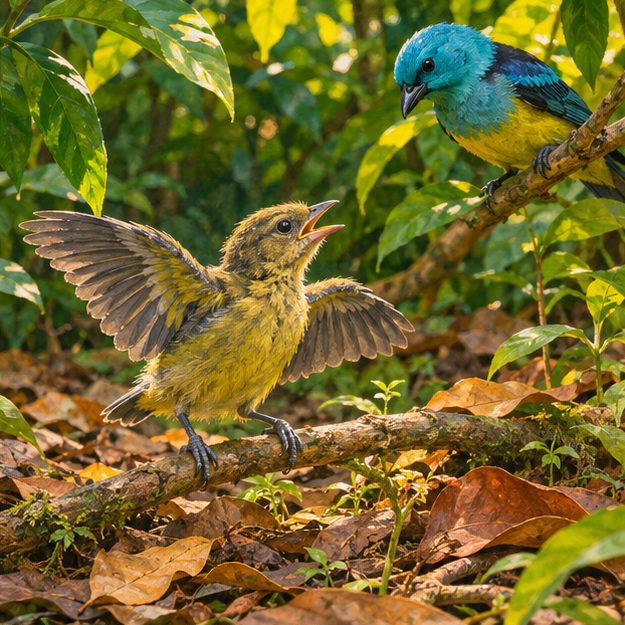
A fledgling in the garden
You see a fully feathered young bird. It hops, can perch on a low branch, and has no visible injuries. It is well away from the road.
Give it space. Many fledglings leave the nest before they can fly well. Their parents can still feed them. Keep dogs, cats, and people away and watch from a spot where you won’t scare the adults off.
Case 2 of 7
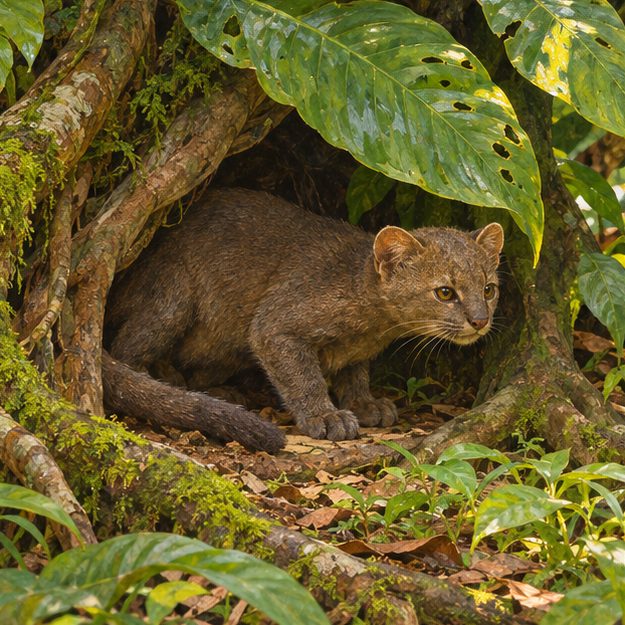
A young jaguarundi among the roots
From the trail, you see a young wild cat curled up under some roots. You see no injuries or immediate danger. Its mother is out of sight.
Leave the hiding place undisturbed. The mother may return. Back away calmly, avoid touching the youngster, and keep pets away. Ask SINAC for advice if the animal is hurt, in danger, or you have reason to think its mother has died.
Case 3 of 7
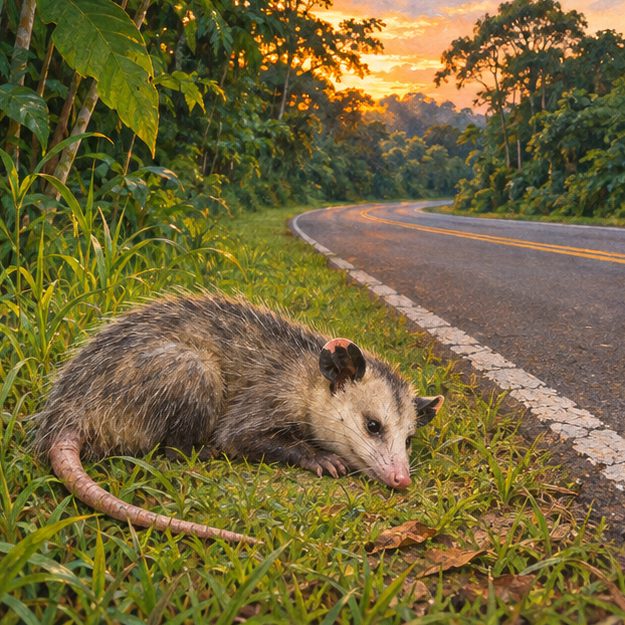
An opossum on the roadside
You saw a car hit an opossum. It is still alive at the edge of the road, bleeding and barely moving. Vehicles are passing.
Call right away. Pull over only if there is a safe place to do so. Stay out of the road and avoid handling the animal. When you call 9-1-1, give the road number, direction of travel, and a landmark.
Case 4 of 7
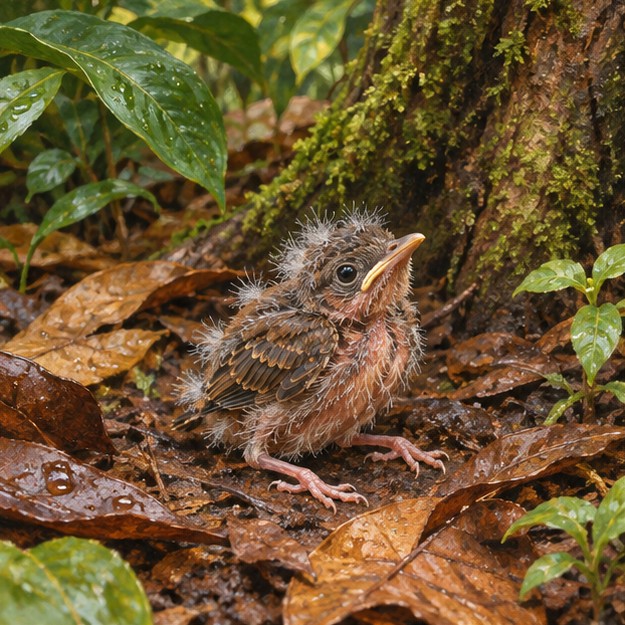
A nestling on the ground
You find a nestling with down and some bare patches. It is on the ground, cannot perch on a branch, and you cannot see the nest from where you are.
Ask before moving it. Describe its feathers and explain that you cannot see the nest. Wait for guidance on whether it can be reunited with its parents.
Case 5 of 7
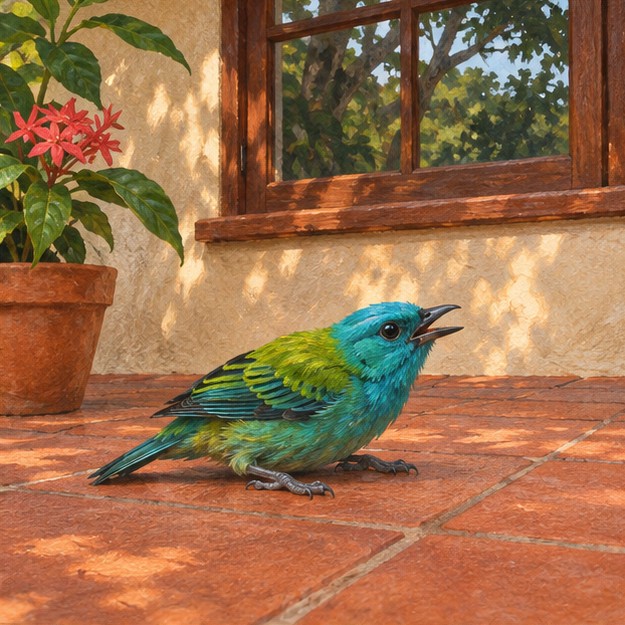
A bird hits a window
You hear the impact and see a bird on the ground below the window. It is alive and stunned. There is no visible blood, but it cannot fly.
Ask SINAC or an authorized rescue center for guidance. Say when the strike happened and that the bird is still stunned and on the ground. Wait for instructions before moving it.
Case 6 of 7
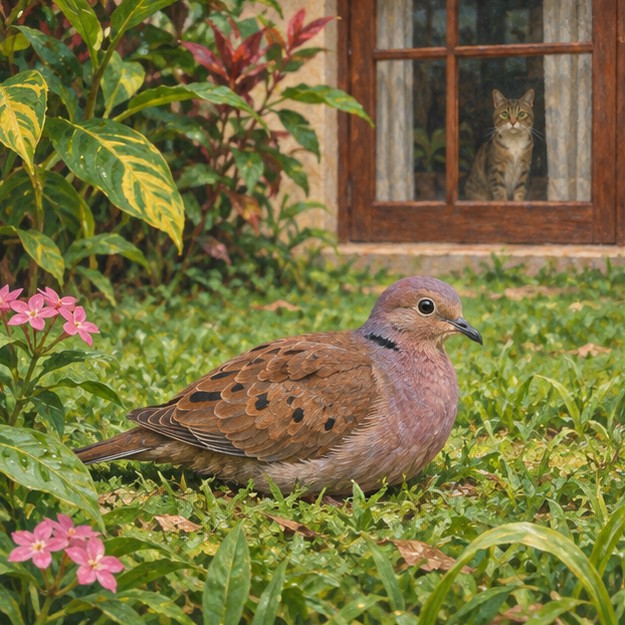
A cat catches a small dove
You see a cat let go of a small dove. The bird walks among the plants and you see no injuries. The cat is still in the garden.
Keep the pet away and get help promptly. The bird may have injuries you cannot see from a distance. Say that the cat had it in its mouth and tell responders where the dove is now.
Case 7 of 7
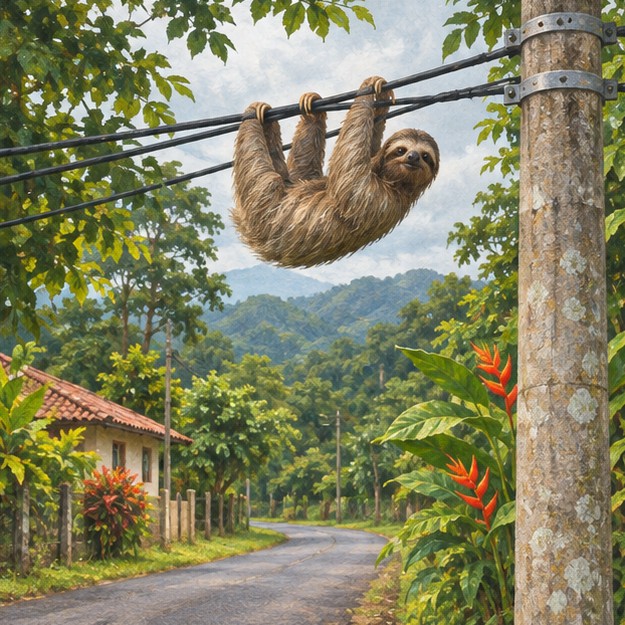
A sloth on power lines
From the sidewalk, you see a sloth gripping two power lines near a utility pole. It is motionless and has no nearby branch to climb onto.
Keep people back and call from a safe place. Give the pole’s location and say that the animal is on power lines. Leave the rescue to the emergency responders and the electric utility.
Choose the safest response to earn a strand.
The nest is ready!
You’ve practiced how to observe wildlife, when to ask for help, and what details to share in a report.
See how injured and orphaned wildlife receives care at the NATUWA Wildlife Rescue Center.
Sources for the guide and game
- Costa Rica Silvestre · Wildlife sightings and encounters (in Spanish)
- Costa Rica Silvestre · Nestlings and fledglings (in Spanish)
- Costa Rica Silvestre · Wildlife on roads (in Spanish)
- NATUWA · Wildlife Rescue Center
- Costa Rica Silvestre · Bird-window collisions (in Spanish)
- National guide to wildlife electrocution (in Spanish)
