Veterinary internships with wildlife in Costa Rica

Veterinarian Program Overview


Natuwa established the Veterinarian Program at our sanctuary with the core mission to manage, maintain, and assist the animals in our care. Home to a diverse collection of species, including jaguars, tapirs, monkeys, macaws, and more, our sanctuary is a haven for approximately 600 animals. These animals require more than daily primary care, necessitating a program designed to meet their complex needs.

Our veterinary internship program is created to allow veterinary students to apply their skills in a real-world setting. The Veterinary internships with wildlife in Costa Rica aims for participants to engage hands-on in activities that directly benefit the animals. With the guidance of a full-time veterinarian and the participation of students, our goal is to ensure that all animals receive the highest standard of care. The program’s activities aid their well-being and provide an invaluable learning experience for the students involved.

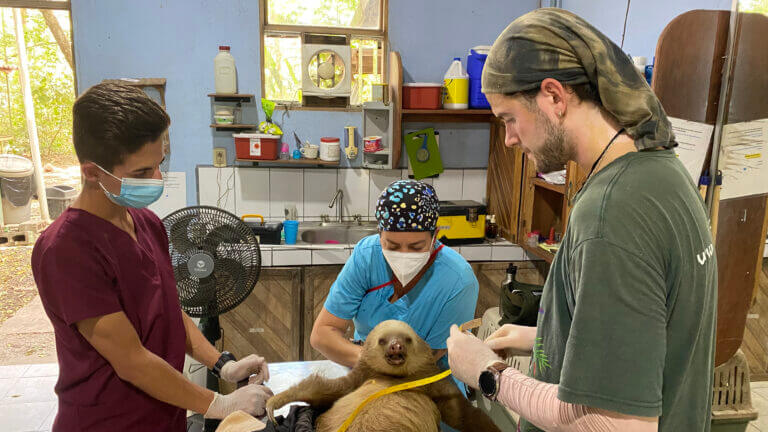
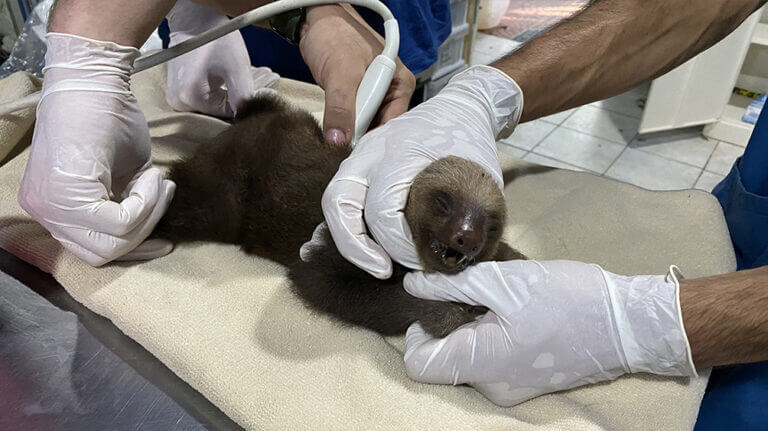
Cirugía de un perezoso
The sloths housed in the sanctuary receive veterinary care to ensure their optimal health.

A significant emphasis of the program is on the conservation and proper management of native Costa Rican wildlife. Participants will work closely with these animals, contributing to their preservation and sending a powerful message to the community about the importance of protecting our ecosystem from the adverse effects of human activities.

Through this program, we aspire to educate and inspire future veterinarians to advocate for wildlife conservation and ethical animal management, ensuring a brighter future for our planet’s biodiversity.

While the program is primarily designed for veterinary students and future veterinarians, individuals who are not currently enrolled in veterinary school are also welcome to participate if they have a genuine interest in wildlife care, animal welfare, and conservation.

Activities

The Internship Program comprises several activities focused on animal welfare such as environmental enrichment, operant conditioning, preventive medicine, feeding, emergency assistance, clinical cases, animal containment, diagnosis of death, among others.

Because NATUWA is a working wildlife sanctuary, veterinary activities are based on the actual needs of the animals. The type and frequency of procedures may therefore vary during each participant’s stay. Animal welfare and veterinary criteria will always determine when and how a procedure is performed.

These activities are carried out with wildlife under the care of NATUWA, a duly registered wildlife sanctuary in Costa Rica.

Wildlife Rescue Center

The NATUWA Veterinary Internship Program also provides participants with the opportunity to learn within our Wildlife Rescue Center, where native wild animals are admitted following injuries, accidents, confiscations, orphaning, human-wildlife conflicts, and other situations requiring professional care.

Under the supervision of our veterinary team, interns may participate in different stages of the rescue and rehabilitation process, including admission assessments, clinical examinations, sample collection, treatments, quarantine procedures, medical record keeping, rehabilitation monitoring, and preparation for release when appropriate. Each animal represents a real case, and the activities available will depend on the animals admitted and their individual needs during the participant’s stay.

Care of Orphaned and Young Wildlife

An important part of rescue center work is the care of orphaned and dependent young animals. Interns may have opportunities to assist with the care, feeding, monitoring, and development of young wildlife such as sloths, deer, opossums, and other species requiring temporary human assistance.

Caring for these animals may require feeding and monitoring outside regular daytime hours, including evenings, nights, or early mornings. Participants should therefore understand that wildlife care sometimes requires flexibility and a willingness to assist when an animal’s welfare requires it.

Emergencies and Availability

The regular internship schedule is generally from 7:00 a.m. to 4:00 p.m. However, wildlife emergencies are unpredictable and may occur at any time. An injured, electrocuted, orphaned, or otherwise compromised wild animal may arrive at the Rescue Center outside regular program hours.

When these situations arise, interns may be invited to participate alongside the veterinary and rescue team. We encourage participants to take advantage of these opportunities whenever possible, as emergency cases can provide some of the most valuable learning experiences of the internship.

Wildlife medicine does not always follow a schedule. For this reason, flexibility, responsibility, and availability are important qualities for participants in the NATUWA Veterinary Internship Program.

Learning Through Every Outcome

Participants may follow wildlife patients through different stages of their care, from admission and stabilization to treatment, rehabilitation, and, when possible, release back into the wild. Not every case has a successful outcome, and interns may also encounter animals whose condition requires humane euthanasia or cases in which post-mortem examination contributes to understanding the cause of death.

These experiences are approached as part of professional wildlife medicine and provide opportunities to learn about clinical decision-making, animal welfare, medical documentation, rehabilitation, release criteria, and the realities and responsibilities involved in caring for rescued wildlife.

Our focus is animal welfare

Environmental enrichment

Among the most important activities to improve Animal Welfare in sanctuaries, zoos and the like is environmental enrichment. Which is widely developed because it improves the quality of life of the faunal species that these sites guard.

The environment for a captive animal should resemble, as much as possible, the conditions in which it lives naturally.

Hence, environmental or behavioral enrichment is achieved by adding objects to the enclosures that allow stimulating behaviors similar to those that occur in healthy free-living individuals.

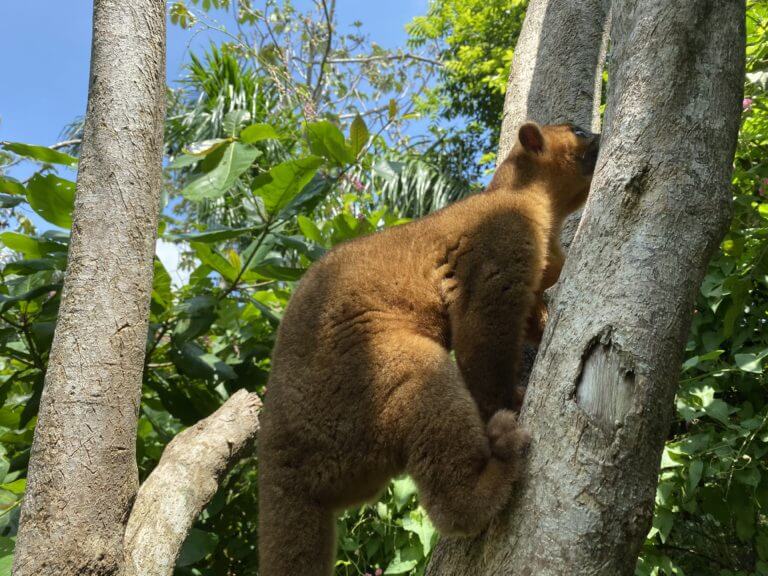
NATUWA Santuario de animales silvestres el Kinkajou

For example, changes will be made to exhibit structures, feeding times, or social groupings. In addition, changes in the form of food supply. Work will be done on the addition of new displacement surfaces (branches, ropes, fences), construction of nests or bedrooms, among other environmental enrichment activities for wild animals in captivity.

With all of the above, it will be possible to satisfy the physical and psychological needs of the animals, helping to avoid or control neurotic or abnormal behaviors (stereotyped) such as “pacing”, regurgitation and re-eating of food or self-mutilation.

Therefore, the intern will participate in a routine in which he will learn to stimulate the animals to sniff, jump, climb trees, fly, swim, among other activities typical of the nature of each individual.

By participating in the Veterinary internships with wildlife in Costa Rica you will learn the bases of an environmental enrichment program in different species, evaluating the interaction and behavior of animals.

Operant conditioning training

The management of wild animals in captivity becomes difficult and dangerous, both for the specimen and for the people involved.

To carry out the different management protocols in any captive wild species, a physical\chemical containment is required.

One of the important aspects of animal training by operant conditioning is the possibility of improving the welfare of the specimens involved. Since, this training promotes physical exercise, mental stimulation and allows veterinary medical procedures to be carried out.

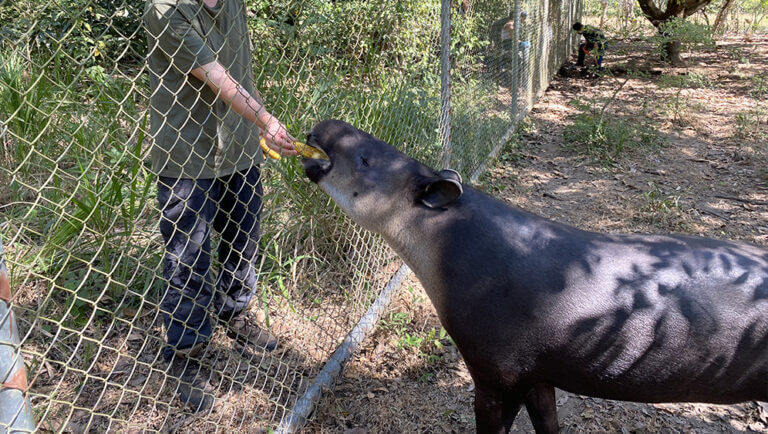
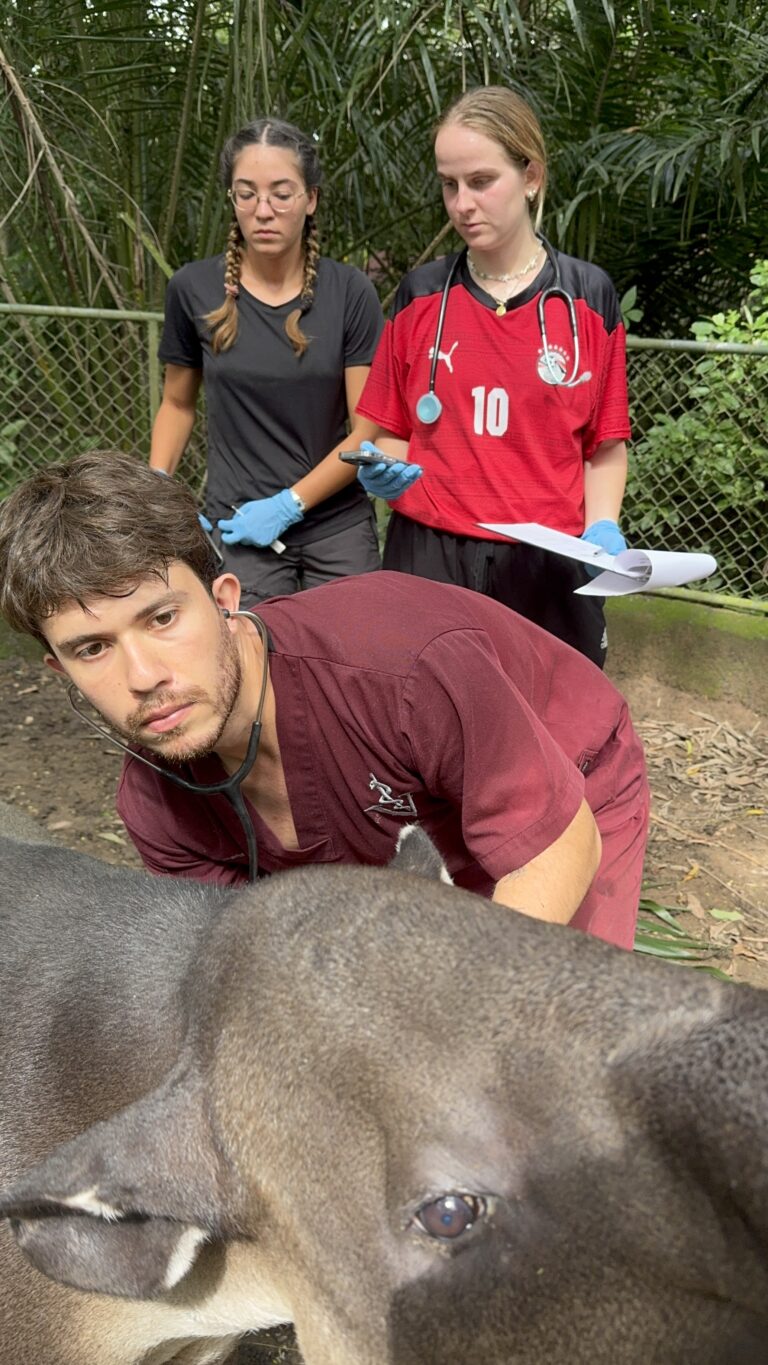
As an intern at NATUWA, you will be able to learn the basic concepts of operant conditioning, and you will have the opportunity to document the evolution of the training program in jaguars, tapirs, macaws and others, under the supervision of the Veterinary Doctor.

Preventive medicine

Preventive health care is an essential part of any captive management program. General Physical Examinations: (Restraint, sample taking, injection sites, deworming protocol).

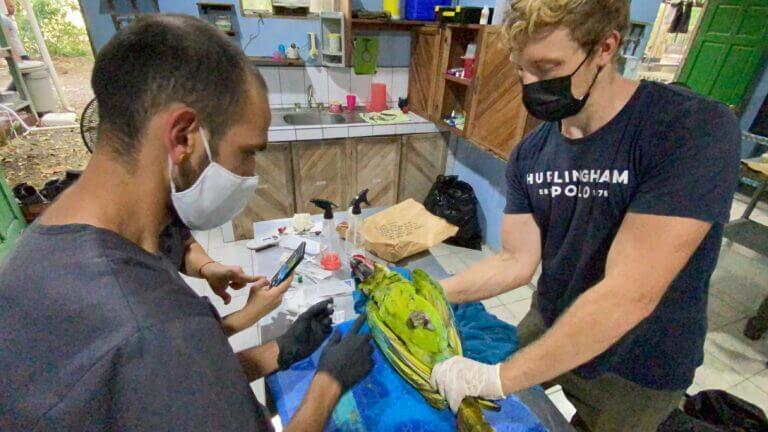
You will participate in a preventive medicine program where you will learn how to manage animal quarantine properly. As well as performing complementary tests (blood samples, skin scrapings, coproparasitoscopic), the different routes of drug administration will also be identified.

Deworming protocols will also be carried out, including routine examinations in mammals, birds and reptiles. You will make collections for the diagnosis and specific treatment of each species. Detecting and controlling parasites will be part of this exercise; in case of positive tests, the most appropriate identification and treatment will be made to help the animals in their immunity processes.

The intern will learn in a practical way how physical containment is carried out in the wild animals that NATUWA houses in order to carry out a complete physical evaluation of the animal (body condition, general condition, etc.).

Therefore, interns will actively participate in the sanctuary’s preventive medicine program, according to the needs of each animal, the clinical cases available during their stay, and the veterinarian’s professional judgment. Participation may include assisting, observing, or performing appropriate procedures under veterinary supervision.

Diet preparation, food handling and cross contamination

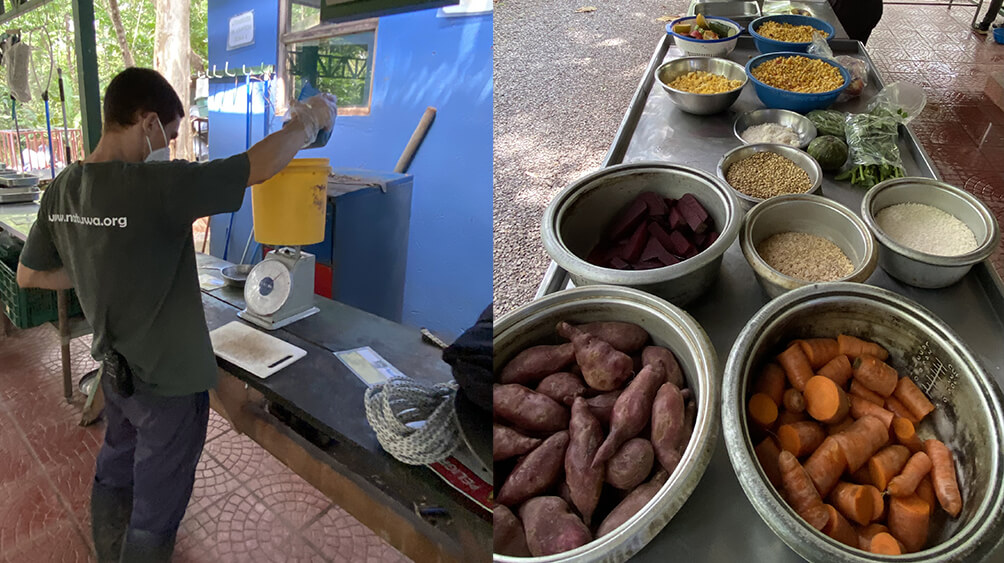
Proper nutrition and food safety are essential components of wildlife health and preventive medicine. Interns will have the opportunity to learn about the preparation and management of diets for different wildlife species according to their nutritional needs, life stage, health condition, and individual requirements.

Participants may assist with food preparation, storage, handling, and distribution while learning the hygiene and biosecurity practices necessary to prevent cross-contamination. Special attention is given to maintaining clean food-preparation areas, using appropriate handling procedures, and understanding how improper food management can affect animal health.

Interns may also learn how diets are documented and adjusted in coordination with the veterinary and animal care teams, helping them understand the relationship between nutrition, clinical condition, animal welfare, and preventive health care.

Emergency assistance

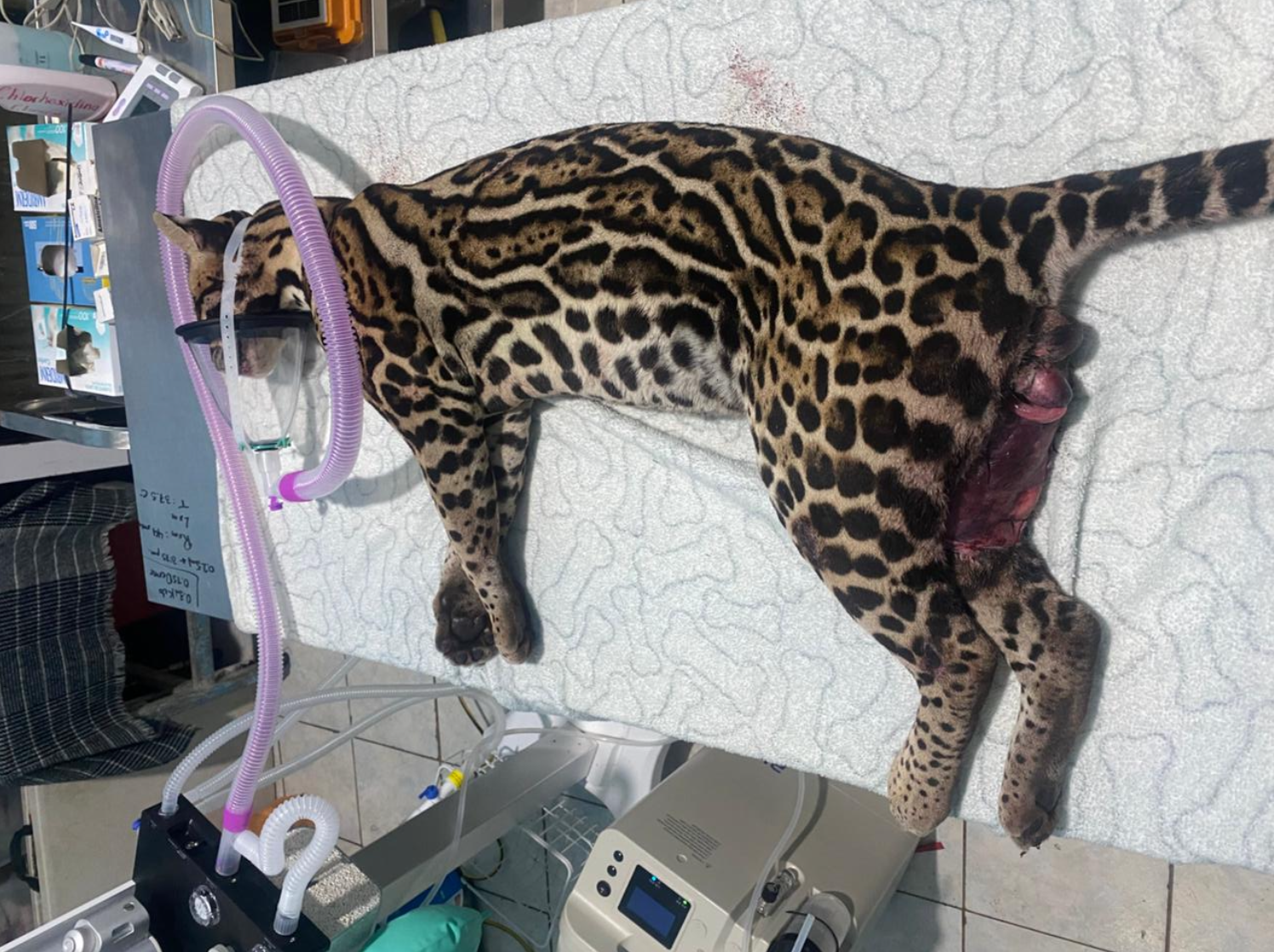
Wildlife emergencies are unpredictable and may arise at any time. When an emergency occurs during the internship, participants may have the opportunity to assist the veterinary team in the initial assessment, stabilization, treatment, and monitoring of the animal.

Depending on the case and the participant’s level of training, interns may assist with monitoring vital signs, preparing materials and equipment, sample collection, patient handling, maintaining clinical records, and other procedures considered appropriate by the veterinarian.

Emergency cases provide an important opportunity to learn how veterinary decisions are made under real-world conditions, where animal welfare, patient stabilization, teamwork, and timely response are essential. The level of participation will always depend on the nature of the emergency and the veterinarian’s professional judgment.

Clinical cases

When clinical cases arise during the internship, participants may have the opportunity to follow the case alongside the veterinary team, from the initial assessment through diagnosis, treatment, and follow-up. Cases may be discussed with the veterinarians and other members of the NATUWA team, providing an opportunity to exchange knowledge and learn from real wildlife medicine experiences.

Depending on the nature and duration of the case, interns may also learn to complete and maintain veterinary records, including annual health examination forms, clinical findings, diagnostic tests, differential diagnoses, treatment plans, procedures performed, and patient progress. This documentation is completed alongside the veterinary team and forms an important part of learning how wildlife health and medical records are managed at NATUWA.

The level of participation will depend on the case, the participant’s training and experience, and the veterinarian’s professional judgment.

Veterinary internships with wildlife in Costa Rica

Chemical and Physical Restraint in Wildlife

In wildlife management, situations may arise in which physical or chemical restraint is necessary to safely examine, treat, transport, or manage an animal. At NATUWA, these procedures are performed by the veterinary team when required, always considering the animal’s condition, welfare, and the specific management objective. The reasons for restraint may range from routine health examinations and preventive care to emergency situations in which an animal’s health or life is at risk.

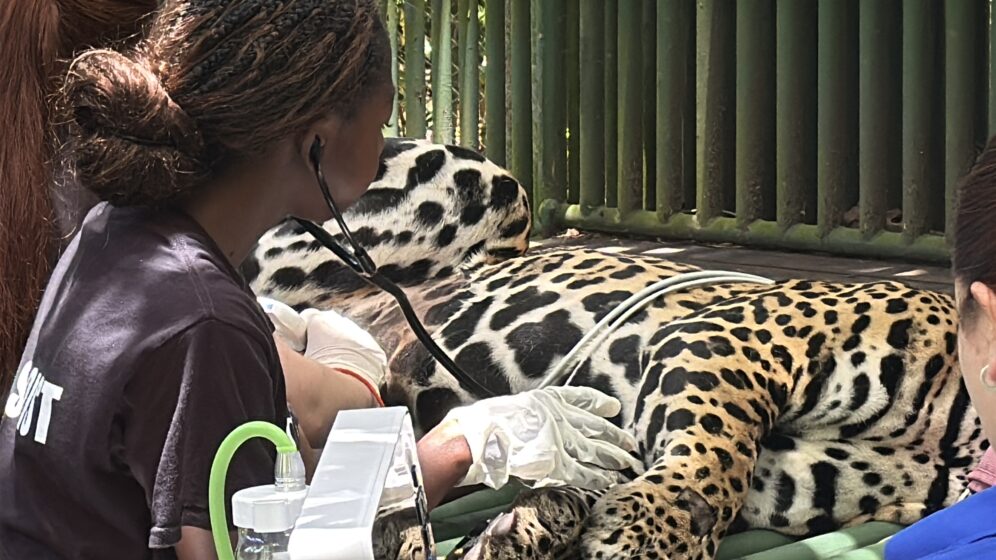
Interns may participate in chemical restraint procedures according to their level of training and experience, the needs of the animal, and the veterinarian’s professional judgment. Participation may include observation, preparation, monitoring, assistance, and, when appropriate, supervised involvement in specific procedures. Chemical immobilization is performed only when medically or operationally necessary for the animal.

Veterinary internships with wildlife in Costa Rica

Chemical Restraint

Interns will be introduced to the principles of chemical restraint in wildlife, including the selection and use of sedatives and anesthetic agents, dosage considerations, patient monitoring, and tele-injection techniques. Depending on the clinical or management situation, as well as the participant’s level of training and the veterinarian’s professional judgment, interns may observe or assist with different stages of these procedures under veterinary supervision.

Physical Restraint

Safe physical restraint is an essential skill in wildlife medicine and management. Interns will learn about appropriate restraint techniques and the use of equipment such as nets, transport or restraint crates, handling sleeves, and other tools selected according to the species, individual animal, and purpose of the procedure.

Special emphasis is placed on minimizing stress and preventing injury to both the animal and the people involved. Participants will learn how factors such as species behavior, physical condition, body size, and the procedure being performed influence the choice of restraint technique.

Depending on the animal, the procedure, the participant’s level of training and experience, and the veterinarian’s professional judgment, interns may observe, assist with, or participate in physical restraint procedures under professional supervision.

Post-Mortem Examination and Necropsy

Understanding the cause of death is an important component of wildlife medicine. When an animal dies at NATUWA, a post-mortem examination may be performed when appropriate to investigate the possible cause of death and obtain information that can contribute to the health and management of other animals under our care.

Under veterinary supervision, interns may have the opportunity to observe or assist with necropsies and learn how a systematic post-mortem examination is performed. This may include reviewing the animal’s clinical history, examining organs and tissues, documenting macroscopic findings, collecting appropriate samples for complementary diagnostic testing, and recording the findings in the animal’s medical record.

Necropsy findings can provide valuable information about disease processes, causes of death, the effectiveness of previous treatments, potential zoonotic or infectious risks, and other factors relevant to preventive medicine and wildlife health.

These cases also provide an important learning opportunity for interns to understand the relationship between clinical history, diagnostic findings, treatment, pathology, and the final outcome of a wildlife patient.

Veterinary Facilities and Real-World Training

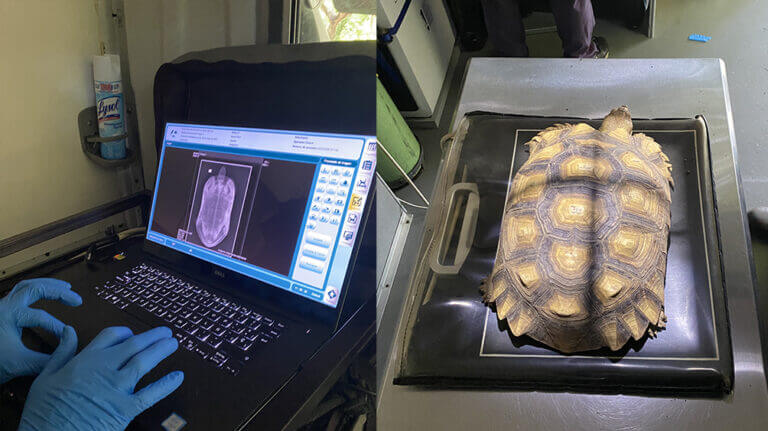
NATUWA provides veterinary facilities and dedicated areas to support the medical care, preventive health, treatment, and rehabilitation of wildlife under our care.

Interns gain experience in a real working environment alongside the veterinary and animal care teams, where facilities and equipment are used according to the needs of each animal and the clinical cases that arise.

The internship combines veterinary facilities with hands-on learning throughout the Sanctuary and Wildlife Rescue Center, allowing participants to understand that wildlife medicine extends beyond the clinic and includes animal handling, preventive medicine, nutrition, quarantine, rehabilitation, medical record keeping, emergency response, and preparation for release when appropriate.

Our goal is to provide participants with a realistic understanding of wildlife medicine while maintaining animal welfare and professional veterinary judgment as the foundation of every procedure.

Veterinary Internship Schedule

At Natuwa, our veterinary interns are actively involved in the care and welfare of the animals, guided by experienced professionals. The regular schedule is designed to offer a complete experience, balancing hands-on practice with appropriate rest periods.

Weekly Schedule (Monday to Saturday):

  • 7:00 a.m. – Start of activities with the sanctuary’s lead veterinarian

  • 8:00 a.m. – Breakfast (30 minutes)

  • 8:30 a.m. to 12:00 p.m. – Continued veterinary activities

  • 12:00 p.m. to 1:00 p.m. – Lunch

  • 1:00 p.m. to 4:00 p.m. – Afternoon veterinary work

Sunday:
Day off for the veterinary team, including the lead vet and all interns.

Affordable rates for our Veterinary Internship Program.

Contact us!

Veterinary Internships in the Biodiversity Paradise: Discover the Magic of Costa Rica and its Wildlife

Our prices are in USD dollars.
$95
  • What is included?
  • Meals (Breakfast, lunch and dinner)
  • Wifi
  • Accommdation
  • Professional Training with a wildlife veterinarian.
  • Materials and Equipment
  • Participation Certificate

Get in contac with NATUWA!

Convert Currency Easily

For our international interns, to view the current exchange rate from US dollars to Costa Rican colones, please click [here] to visit the Banco de Costa Rica’s official currency converter.

Rodolfo